

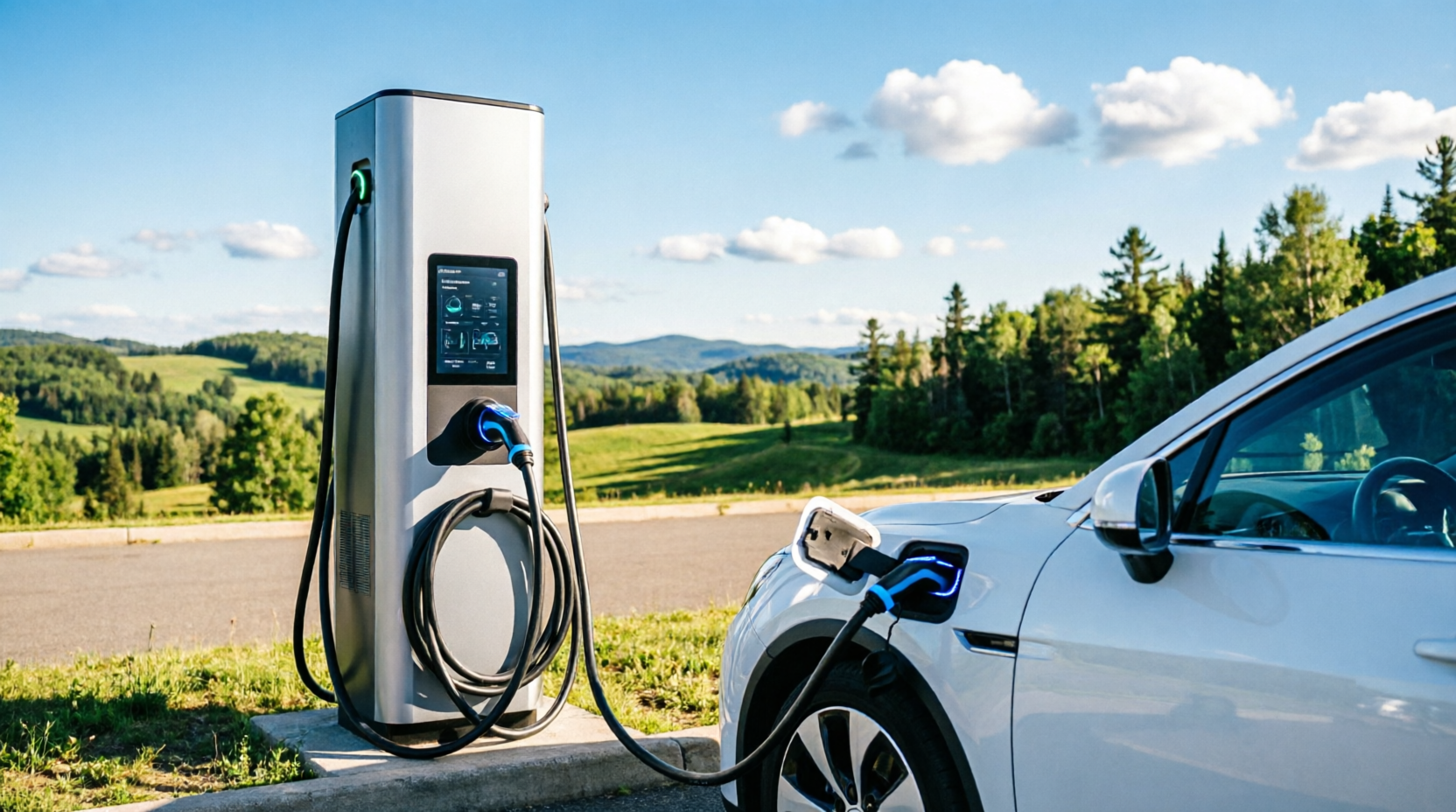
The transition to electric vehicles (EVs) in Canada has reached a critical mass in 2026, driven by stringent federal emissions targets, generous provincial rebates, and a growing consumer desire for sustainable transportation. However, the widespread adoption of EVs has historically been hindered by “range anxiety”—the fear of running out of power before reaching a charging station. This summer, that anxiety is being systematically dismantled as massive new charging networks launch across Ontario and Quebec, transforming the summer road trip experience and making EV ownership a viable option for millions more Canadians.
Advertisement
Ontario and Quebec, being the most populous provinces and the primary manufacturing hubs for the Canadian automotive industry, are at the forefront of this infrastructure boom. Along the heavily traveled Highway 401 corridor in Ontario and the Highway 20 and 40 routes in Quebec, the density of fast-charging stations has increased exponentially. Major players like Petro-Canada have significantly upgraded their “Electric Highway,” replacing older, slower chargers with ultra-fast DC fast chargers (DCFC) capable of delivering up to 350 kilowatts. This means that drivers can now add over 300 kilometers of range to their vehicles in just fifteen to twenty minutes, making stops for charging as quick and convenient as a traditional gas station visit.
A major catalyst for this summer’s expansion is the opening of Tesla’s Supercharger network to non-Tesla electric vehicles. Following successful pilot programs in previous years, Tesla has fully integrated its extensive and highly reliable charging network into the broader Canadian EV ecosystem. This move has instantly doubled the number of available fast chargers in many rural and suburban areas of Ontario and Quebec. To facilitate this, charging networks have adopted the North American Charging Standard (NACS) alongside the traditional CCS1 standard, and automakers are rapidly releasing adapters to ensure seamless compatibility for all EV drivers.
In Quebec, the homegrown charging company FLO has aggressively expanded its footprint, particularly in rural and northern regions of the province. FLO’s network now covers almost every major tourist destination, from the Laurentian Mountains to the Gaspé Peninsula. The company has also introduced innovative “Plug & Charge” technology at many of its stations, allowing drivers to simply plug in their vehicle and have the payment processed automatically through their car’s built-in software, eliminating the need to fumble with apps or credit cards at the terminal.