

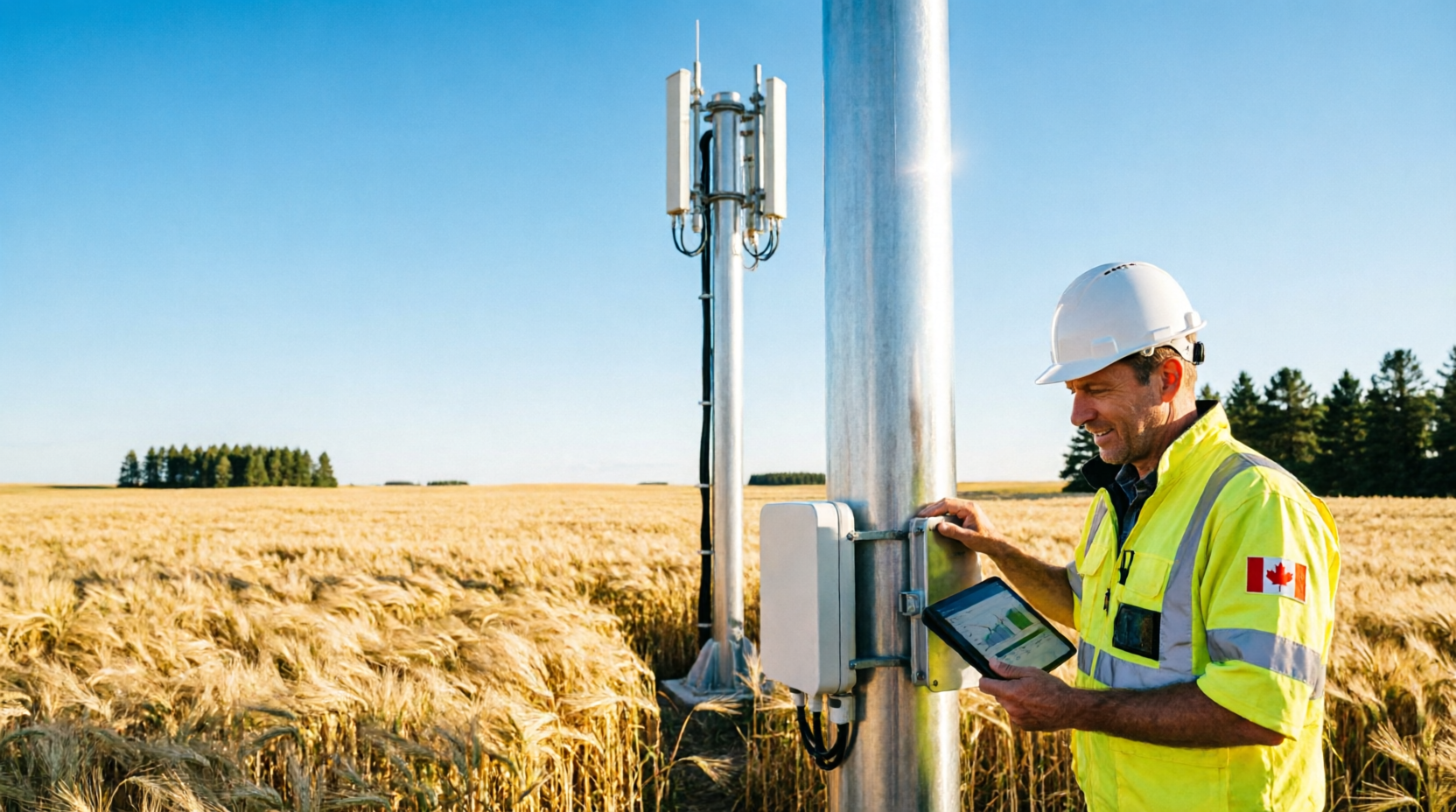
For decades, the digital divide between urban and rural Canada has been a persistent challenge, limiting economic opportunities, educational access, and healthcare delivery in remote areas. However, 2026 marks a pivotal turning point as the expansion of 5G networks finally reaches deep into the Canadian countryside. Driven by a combination of massive private investments from major telecom providers like Bell, Rogers, and Telus, alongside substantial federal funding through the Universal Broadband Fund, rural communities from the Maritimes to Northern British Columbia are experiencing high-speed internet access for the first time.
Advertisement
The rollout of 5G in rural areas differs significantly from the dense urban deployments seen in cities like Toronto and Vancouver. In metropolitan centers, telecom companies utilize high-band millimeter-wave spectrum, which offers blistering speeds but has a very short range. In contrast, rural expansion relies heavily on low-band and mid-band 5G frequencies. These spectrums can travel much longer distances and penetrate obstacles like trees and buildings more effectively, making them ideal for covering vast, sparsely populated landscapes. By strategically placing new cell towers on existing infrastructure, such as grain silos, water towers, and highway overpasses, providers are able to blanket large rural areas with reliable, high-speed coverage.
Specific regions are already reaping the benefits of this technological leap. In rural Ontario, communities along the northern shores of Lake Huron and in the expansive agricultural belts of the southwest are now connected to robust 5G networks. Similarly, in the Prairie provinces, towns in Saskatchewan and Manitoba that previously relied on slow, unreliable satellite internet are now utilizing 5G for their daily connectivity needs. In British Columbia, the rollout has focused on connecting remote valleys and coastal communities, while in Atlantic Canada, the expansion is bridging the gap between isolated fishing villages and the digital economy.
The impact of high-speed 5G access on rural agriculture is particularly profound. Precision farming, which relies on real-time data from soil sensors, automated tractors, and drone imagery, requires a stable and fast internet connection. With 5G, farmers can now monitor crop health, optimize irrigation, and manage livestock remotely with unprecedented accuracy. This technological integration not only increases crop yields and reduces resource waste but also ensures that Canadian agriculture remains competitive on the global stage.