

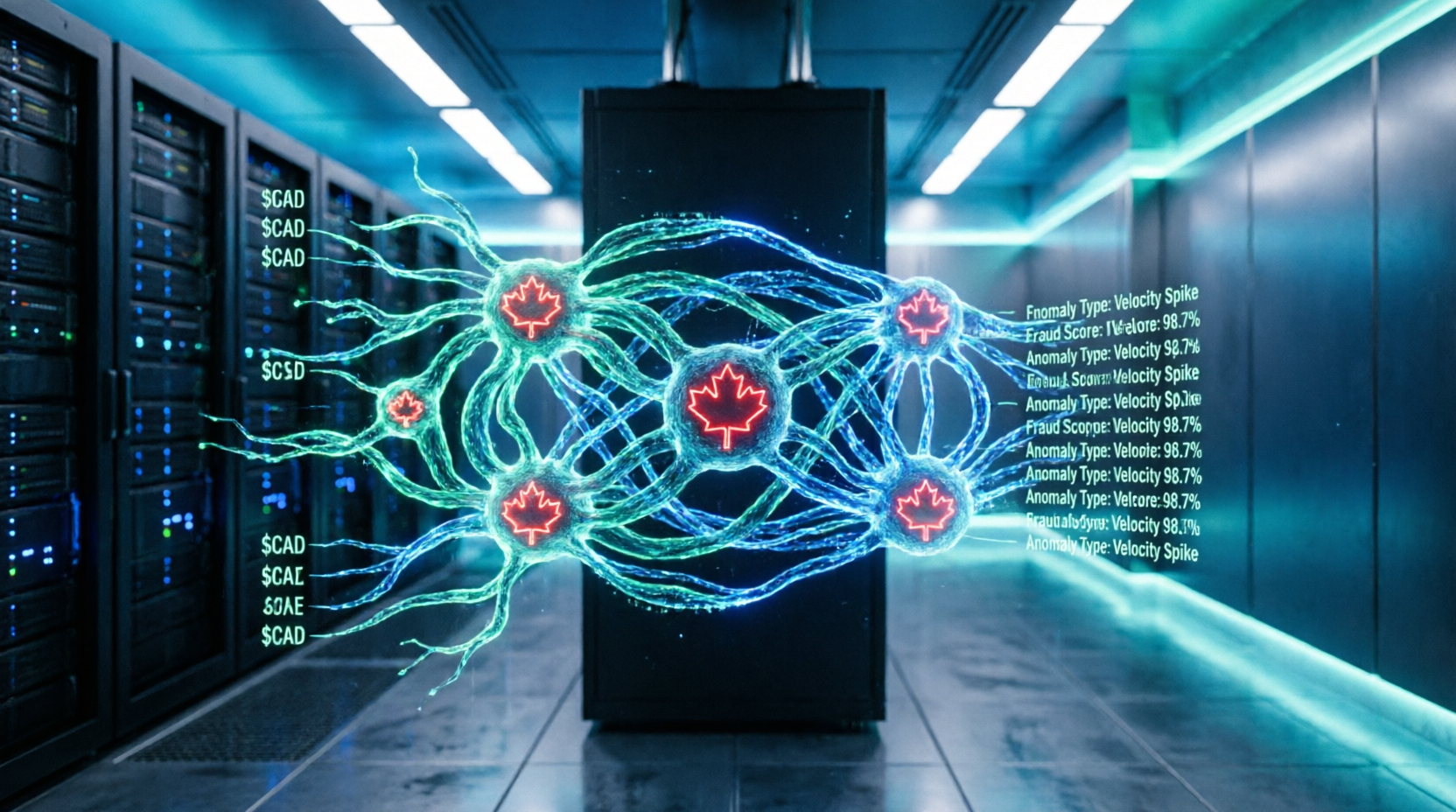
The Canadian banking sector has long been recognized globally for its stability and resilience, but in 2026, its most significant transformation is happening behind the scenes through the integration of advanced artificial intelligence. As financial fraud becomes increasingly sophisticated, leveraging deepfakes, synthetic identities, and complex money laundering schemes, Canada’s major financial institutions—including RBC, TD, Scotiabank, BMO, and CIBC—have shifted from traditional rule-based security systems to dynamic, machine-learning-driven AI models. This technological evolution is not only protecting billions of dollars in consumer assets but is also fundamentally changing how Canadians interact with their money on a daily basis.
Advertisement
Historically, fraud detection relied on static rules, such as flagging a transaction if it occurred in a different country or exceeded a specific dollar amount. While effective in the past, these rigid parameters often resulted in a high volume of false positives, frustrating customers whose legitimate purchases were declined. Today, AI algorithms analyze thousands of data points in milliseconds, evaluating the context of a transaction rather than just its basic attributes. By examining a user’s typical spending habits, device location, typing speed, and even the time of day, these systems can accurately distinguish between a genuine purchase made while traveling and a fraudulent attempt by a cybercriminal.
The deployment of neural networks and predictive analytics allows Canadian banks to identify fraudulent patterns before a transaction is even completed. For instance, if a fraudster gains access to a customer’s online banking credentials, the AI can detect subtle anomalies in their navigation behavior, such as hovering over the transfer button in an unusual manner or logging in from an unrecognized device fingerprint. In such cases, the system can seamlessly trigger a step-up authentication process, prompting the user for a biometric scan or a one-time passcode, thereby neutralizing the threat without disrupting the experience for legitimate users.